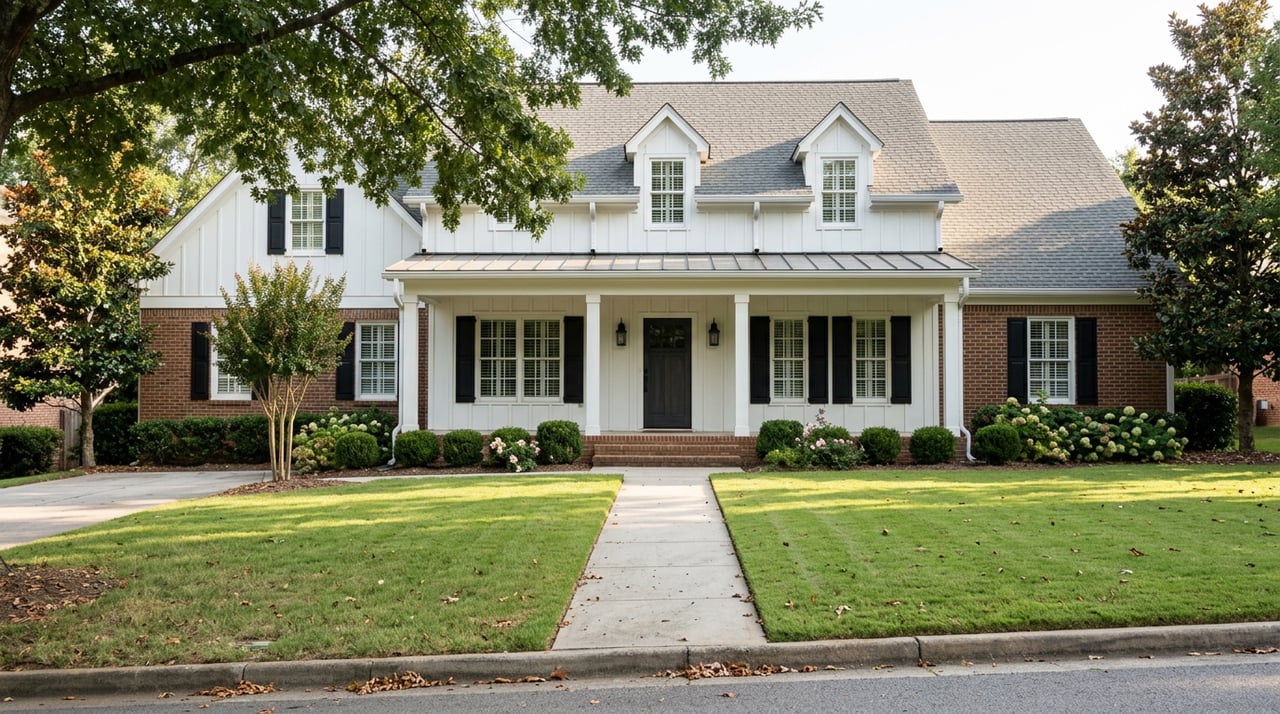
Buying your first home in Hoover can feel exciting and overwhelming at the same time. You want a neighborhood that fits your budget, commute, and everyday life, without guessing on long-term value. The good news: you can narrow your options quickly with a simple, data-backed plan focused on the Jefferson County side of Hoover. In this guide, you’ll learn how to compare commute times, map daily amenities, set a realistic price range, and judge resale potential. Let’s dive in.
Get oriented to Hoover, Jefferson County
Hoover spans two counties, Jefferson and Shelby. If you need to stay in Jefferson County, confirm any address you consider sits within that portion of the city. Hoover is the largest suburban city in the Birmingham metro and is shaped by a few key corridors: I-459 along the south beltway, I-65 running north-south, and U.S. 31 and U.S. 280 as primary surface routes. Expect routine rush-hour slowdowns along the 280 and I-459 interchange areas, so place extra weight on commute checks for homes near those segments. You can read more background about the city in the overview of Hoover, Alabama.
Neighborhood clusters to know
Riverchase, Patton Creek, Galleria corridor. Centered on the I-459 and John Hawkins Pkwy area, this is a major shopping and employment hub with a mix of multifamily, townhomes, and single-family options. Many first-time buyers start here due to access to everyday conveniences and a range of price points.
Trace Crossings. A large, master-planned community with sidewalks, pools, and varied price tiers. It often has both resale and pockets of new construction, which gives you options within the same area. Explore the community overview for Trace Crossings.
Ross Bridge. A newer master-planned, resort-style community with a golf destination and village-style amenities. Branding and amenities tend to push prices higher than some nearby areas. See the development profile for Ross Bridge.
Bluff Park and the Shades Mountain edge. Older, hillier neighborhoods with established single-family homes and topographic variety. Yards and driveways can differ block by block here, so on-the-ground visits are essential.
Greystone and nearby golf-course pockets. Gated, golf-centric communities with executive homes and higher price tiers. While not typical first-time targets, they help you benchmark top-of-market finishes and amenities when evaluating value.
Use these clusters to match your non-negotiables. If you prioritize commute and daily retail, the Riverchase and Galleria area may rise to the top. If you want a planned-community feel with pools and sidewalks, Trace Crossings and Ross Bridge are good tests. If you value character lots and mature trees, add Bluff Park.
Commute check: how to test it
Hoover is shaped by car commuting. The U.S. Census reports a mean travel time to work of about 25 minutes for Hoover workers, a useful baseline as you test routes. Treat that as a citywide average, then measure your own door-to-desk reality during peak hours.
A simple commute framework
Measure peak door-to-desk time. On 2 to 3 weekdays, use your navigation app to time the full trip during both AM and PM peaks. Record the fastest and the typical times across a 30-to-60-minute window.
Stress test route resilience. Identify at least one credible alternate route. For example, compare using U.S. 280 vs. segments of I-459 if your job is near those corridors. Note how often incidents force long detours.
Factor transit realities. Daily fixed-route options are limited in Hoover, though MAX Transit’s routes page can help you spot any relevant connections, including Route 31 around the Riverchase Galleria.
Watch future road projects. Proposed ALDOT or regional MPO work near U.S. 280 or I-459 can affect congestion short term during construction and improve flow longer term. Scan the ALDOT public involvement updates for nearby projects.
Set a maximum commute target, like 30 minutes. Any neighborhood that repeatedly exceeds it during peak windows likely belongs off your shortlist, unless flexible work days make it acceptable.
Daily convenience and lifestyle
First-time buyers tend to use a neighborhood most during weeknights and weekends. Map the practical, not just the theoretical.
Everyday errands. Note the closest supermarket, pharmacy, and urgent care, plus one easy dinner or entertainment spot. The Riverchase and Patton Creek corridor concentrates retail and dining, which can save time.
Parks and green space. Hoover has standout public spaces that shape weekend routines and support resale. Stroll the Aldridge Botanical Gardens loop after work, explore the trails and boulder fields in Moss Rock Preserve, and check the event calendar at the Hoover Metropolitan Complex for sports and community festivals.
Medical access. If quick access matters, identify the nearest urgent care and note trip times to regional anchors like Grandview Medical Center along the south Birmingham corridor.
Walkability and transit. Hoover is largely car-dependent, though the commercial stretches around U.S. 31 and the Galleria area have relatively better walk and transit access. If walkability is a priority, compare address-level scores on Walk Score for Hoover rather than relying on city averages.
Spend one weekday afternoon walking a target block. Listen for road noise, check for sidewalks, and test access to your chosen grocery or gym. That 20-minute loop can confirm whether “close by” feels easy in real life.
Price and home types: set expectations
Market snapshots differ by data source because some report sold prices while others show listing prices. Recent aggregator figures suggest a median Hoover sold price near 429,000 dollars and a median Hoover listing price around 520,000 dollars in late 2025 to early 2026. Sold-price medians are better for setting realistic expectations. For a longer-term baseline separate from short-term swings, the U.S. Census reports a median value of owner-occupied housing around 391,300 dollars for Hoover. You can confirm citywide context on Census QuickFacts for Hoover.
What you’ll see by area
Riverchase and Trace Crossings. Primarily single-family homes with a range of sizes and some townhome or condo options near retail nodes. Many first-time buyers find their entry point here, especially where townhomes offer lower maintenance and price bands. Review community context for Trace Crossings.
Ross Bridge. Newer, master-planned homes with resort-style branding and a golf destination. Expect a higher average price point than some nearby areas, balanced by cohesive amenities. Learn more in the Ross Bridge profile.
Bluff Park. Established homes on varied terrain, from mid-century forms to updated renovations. Lot topography and driveway slope can vary, so consider a pre-offer walk to verify practical access and parking.
New vs. resale. New construction offers warranties and modern systems, but often carries premiums and HOA obligations. Resale homes can provide value, with room to update over time. If you are open to both, track inventory in master-planned areas that have a mix of new and resale.
Start by defining a price band that aligns with recent sold comps in your target areas. As you compare per-square-foot norms across neighborhoods, remember that homes near I-459 and Riverchase often price differently than hillside sections of Bluff Park because of topography, yard usability, and immediate amenity access.
Resale potential: what to record
You can protect your future flexibility by tracking a few address-level factors while you shop.
Commute access. Note proximity to I-459, U.S. 280, and U.S. 31, and record realistic peak commute times to major job centers.
Lot and topography. Flat or gently sloped yards are easier to maintain and appeal to a wider set of future buyers than steep lots.
Flood considerations. Check whether a property sits near Patton Creek or the Cahaba River corridors and confirm its flood zone status. Hoover’s official page on local flood information links to FEMA and state map viewers. Properties in special flood-hazard areas may require flood insurance for federally backed loans, which can affect affordability and future buyer pools.
HOA rules and fees. Master-planned communities typically have HOA covenants. Request recent budgets, reserve studies, and CCRs early to understand restrictions and fee trends.
Supply and nearby projects. If an area is still building out, near-term competition can influence resale within a few years. Also track public road projects on the ALDOT updates page that could change commute patterns over a 3-to-7-year horizon.
Here is a quick fill-in checklist to compare addresses:
- Typical peak drive time AM/PM: ___ / ___
- Alternate route(s): ___
- Median recent sold price (last 12 months): ___ (source/date)
- Price per sq ft (typical): ___
- Home type and median lot size: ___
- Walk Score / Transit Score (address-level): ___ / ___
- Closest grocery / pharmacy / urgent care (minutes): ___ / ___ / ___
- Flood zone? Y/N and panel: ___
- HOA? Y/N — fees and key CCR notes: ___
- Known near-term public projects (0–5 years): ___
A 6-step workflow to choose your neighborhood
Fix your non-negotiables. Cap commute time, set a top purchase price, decide on single-family vs. townhome/condo, and list must-have features like bedroom count or a usable yard.
Build a longlist of 6 to 8 areas. Include Riverchase/Galleria, Trace Crossings, Ross Bridge, Bluff Park, and one or two comparison areas. If you need to remain in Jefferson County, confirm each candidate is inside that boundary.
Populate the checklist. Pull peak drive-time tests, recent sold medians, address-level walk and transit scores, flood status, and HOA facts. Use Walk Score for Hoover for quick walkability snapshots and the city’s local flood information page to jump to official map tools.
Field-test two finalists. Drive inbound and outbound during your typical commute window. Walk a weekday afternoon to check noise, sidewalks, and how “close by” errands feel.
Compare and cut. Eliminate any neighborhood that violates your non-negotiables or shows weak route resilience.
Validate with comps and documents. For your final 1 to 2 neighborhoods, pull at least three closed comps in your price band, line up a trusted inspector, and request HOA documents early if applicable.
Ready to tour with a plan?
With a clear checklist and a few targeted drive tests, you can find the right Hoover neighborhood on the Jefferson County side without second-guessing. If you want local guidance that blends neighborhood insight with practical construction advice, reach out to Hannah Dean Bygrave for a friendly, no-pressure consult and next steps.
FAQs
What is a realistic Hoover-to-downtown commute during rush hour?
- The Census reports an average Hoover commute near 25 minutes, but you should test your own door-to-desk times over multiple peak windows and plan a reliable alternate route.
Are there Hoover areas with entry-level townhomes or condos?
- Yes, options tend to cluster near the Riverchase, Patton Creek, and Galleria corridor, with additional townhome and mixed product types in master-planned areas like Trace Crossings.
How car-dependent is Hoover if I want walkable errands?
- Hoover is predominantly car-dependent, though the U.S. 31 and Galleria corridor offer relatively better walk and transit access; verify address-level walkability using Walk Score and a real-life afternoon walk.
How should I check flood risk near Patton Creek or the Cahaba River?
- Start with the city’s local flood information page, then confirm the FEMA panel and any insurance needs; proximity to these corridors can place properties in special flood-hazard areas.
Which price data should I trust when setting a budget?
- Use recent sold-price medians to set expectations, compare against the citywide owner-occupied value baseline from Census QuickFacts, and review closed comps in your target neighborhoods for accuracy.